 Ideas Factory/ the foundry
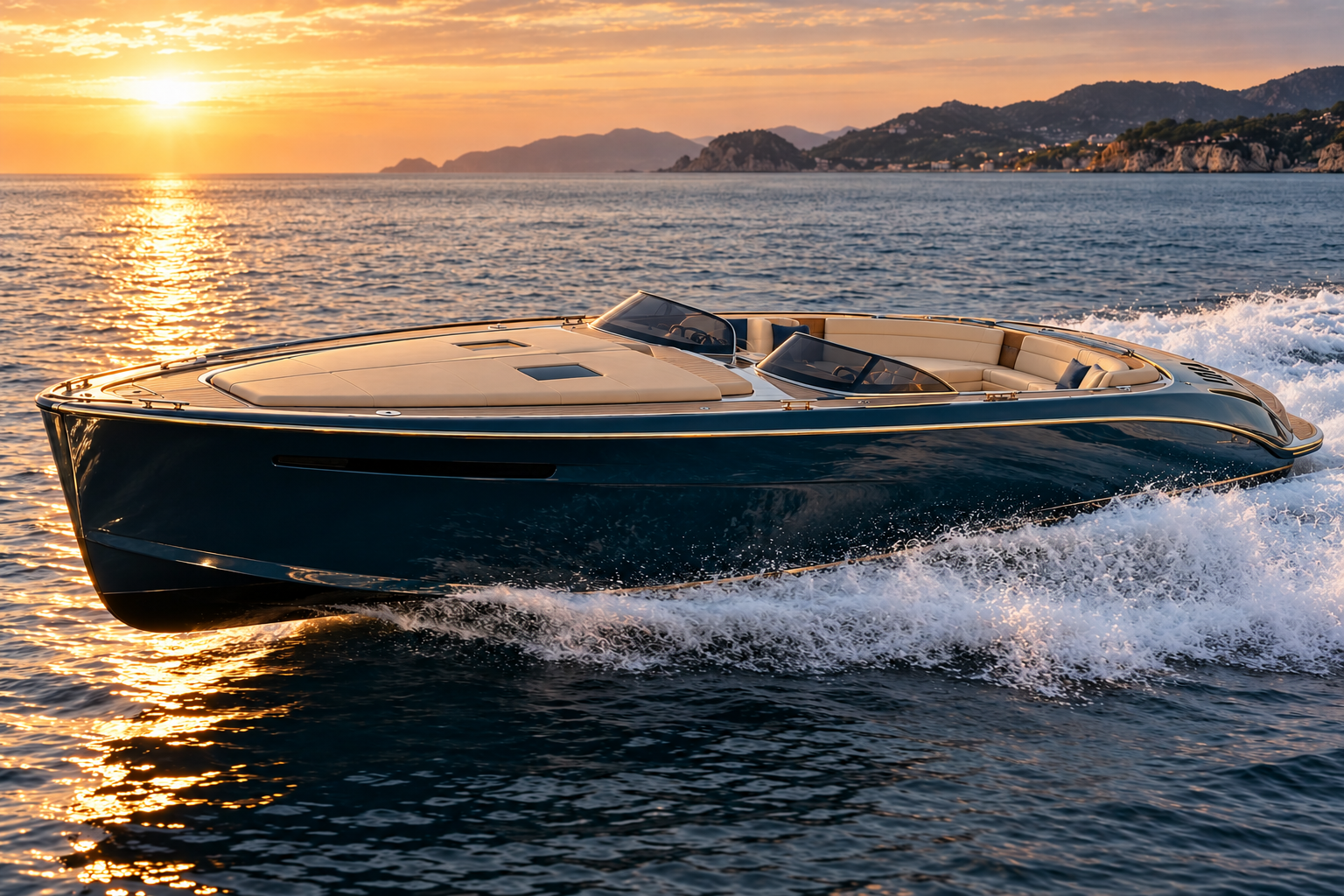
← the floorNotte Blu/parts·if / 066
Engines and drivetrain
Twin Volvo Penta D6 diesels at 440 hp through V-drives to shafts and props, for an estimated 44 to 48 knots.
The card
parts 04 of 07Engines and drivetrain
The notes
renderedRecommendation: twin Volvo Penta D6 diesels at 440 hp each (880 hp total), driving through V-drive gearboxes to conventional shafts and props. The sculpted tail rules out sterndrives and outboards, since both need a flat transom. V-drives put the engines right aft under the cockpit, keeping the cabin clear.
weight estimate
Approximate, ready to go to sea.
| Item | kg |
|---|---|
| Hull, deck and framing (ply, epoxy, glass) | 2,000 |
| Twin engines and gearboxes | 1,560 |
| Shafts, props, rudders, steering | 200 |
| Fuel, 600 L diesel | 500 |
| Fresh water, 150 L, plus tanks | 250 |
| Interior fit-out | 500 |
| Electrics and batteries | 250 |
| Deck gear and misc | 350 |
| Crew, 6 people | 480 |
| Total | about 6,100 |
power needed for 40+ knots
Using Crouch's planing formula with a sport-boat constant of 180 to 190, this hull needs roughly 600 to 750 hp total for 40 knots. Twin 440s give a margin, with an estimated top speed of 44 to 48 knots. Treat this as a concept estimate; a naval architect must confirm it.
V (knots) = C ÷ √(weight in lb ÷ hp)
diesel options
| Engine | Power | Weight each | Notes |
|---|---|---|---|
| Volvo Penta D6 (recommended) | 440 hp (480 available) | about 625 to 720 kg by version | 5.5 L in-line 6; strongest UK dealer support |
| Yanmar 8LV370 | 370 hp | 435 kg without gearbox | V8, much lighter; mainly sold for sterndrives, so confirm a shaft or V-drive package |
| Cummins QSB6.7 | up to 550 hp | about 658 kg | 6.7 L; most power, similar weight to the Volvo |
fuel and range
Approximate. Diesels burn roughly 0.2 L per hp per hour at full load. At a 35 knot cruise the pair would use around 140 L/h, giving about 4 hours or 150 nautical miles from 600 L, before reserve.
layout
- Engines side by side under the cockpit floor, aft of the rear bench
- V-drives turn the drive back under the engines; shafts exit the hull bottom at a shallow angle
- Twin props with spade rudders behind them, tucked under the tail
- Fuel tanks amidships, low, either side of the keel, to keep the centre of gravity forward
- Engine room vented through the aft-deck vents, with a fire suppression system and a watertight bulkhead to the cabin
The Volvo Penta D6-440 data sheet lists 625 kg dry for the bobtail engine (that sheet is for the waterjet version).
The drawings
1 sheet