 Ideas Factory/ the foundry
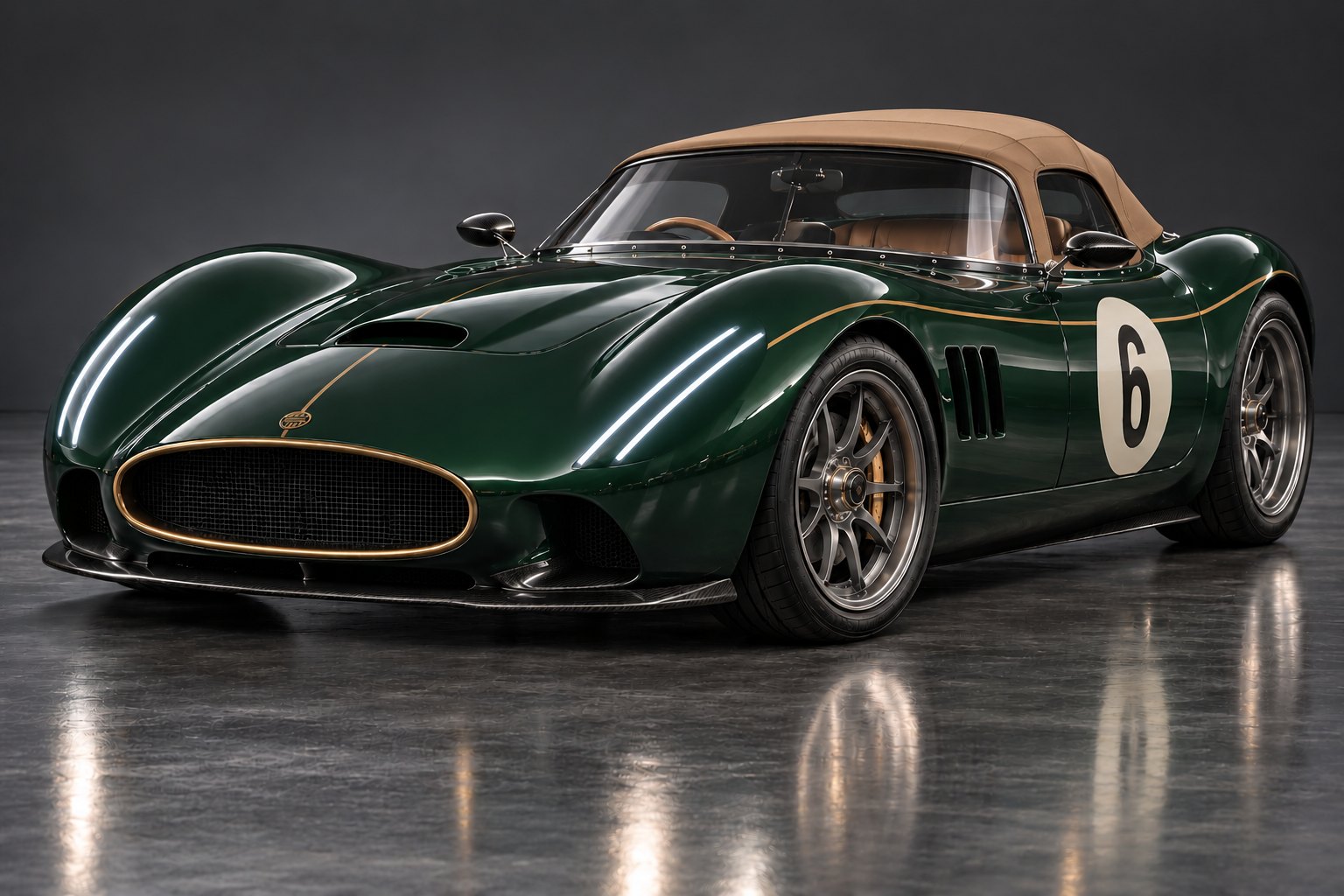
← the floorKreation Silhouette/parts·if / 070
Manufacturing and Teesside
A hand-built car at around 50 a year rising to 150, from a 1,500 to 2,000 m² unit on Teesside, approved first one car at a time and then as a small series.
The card
parts 06 of 07Manufacturing and Teesside
parts 06 of 07idea_070
The notes
renderedPlanned as a hand-built car at low volume. The figures here are a starting plan and assume around 50 cars a year at launch, rising to 150.
facility
- An industrial unit of roughly 1,500 to 2,000 m².
- A chassis bay with welding jigs for the T45 spaceframe and the bonded floor.
- A composite shop: master patterns, moulds for each panel, resin infusion and prepreg carbon layup, with a curing oven.
- An engine build room and a dyno cell. Every engine is run in and power-checked before fitting.
- A paint booth, or paint subcontracted to a specialist in the early years.
- Four to six final assembly stations, wheel alignment, a water leak booth and a short test route.
made in house
- Spaceframe fabrication and bonding.
- Body panels and carbon parts.
- Engine assembly, using machined parts from partners.
- Final assembly, trim fitting and quality checks.
bought in
- Triumph 1160 triple top-end parts. This needs a supply agreement with Triumph rather than buying through dealers.
- The billet crankcase and crankshaft, from a precision machining partner.
- The supercharger, chargecooler, sequential transaxle and paddle-shift system, from specialist suppliers.
- Wheels, brakes, dampers, the laminated windscreen, LED light units, the soft top and the leather trim.
tooling
- Chassis jigs and bonding fixtures.
- Body moulds for every panel, with spare sets for the most used ones.
- Engine build fixtures and a crankcase line-boring setup.
- Custom tooling for the LED light blades, which are unique to this car.
people
Roughly 15 to 20 staff at 50 cars a year: fabricators, composite technicians, engine builders, assemblers, trimmers, a quality lead and a homologation engineer.
approval and testing
- Early cars and prototypes go through Individual Vehicle Approval, one car at a time.
- Series production moves to GB small series or GB medium series approval. Medium series covers cars built in quantities under 1,500 a year.
- At under 1,000 cars a year, the brand falls outside the 2030 to 2035 zero emission vehicle rules, so a petrol-only car stays possible.
- Testing for noise, emissions, lighting, seat belt anchorages and interior safety.
biggest manufacturing risks
- Light blades. Headlights must meet UK beam and lighting rules. The blades will likely need hidden projector modules behind them, which is an engineering and approval job in its own right.
- Engine supply. The whole car depends on one engine family staying in production.
- Noise. A high-revving engine needs valved exhausts to pass drive-by noise tests.
built on Teesside
- Freeport tax site. Teesside was the first UK freeport to become operational. Businesses on designated tax sites in England can claim enhanced capital allowances on plant and machinery and on new buildings, business rates relief, Stamp Duty Land Tax relief and employer National Insurance relief. These reliefs were extended to 30 September 2031, subject to each freeport's delivery plan. Eligibility for a specific site needs checking with the freeport team.
- Automotive supply chain. The North East Automotive Alliance describes itself as the UK's largest automotive cluster, built around Nissan's Sunderland plant around 30 miles north up the A19, with Tier 1 suppliers and specialist engineering firms across the region.
- Skills. Teesside's steel and process engineering heritage gives a strong base of fabricators, welders and machinists. Teesside University and local colleges can support engineering apprenticeships.
- Logistics. Teesport for shipping export cars, and the A19 and A1(M) for UK deliveries.